New Prague Philharmonic — teaching notes from SIGS
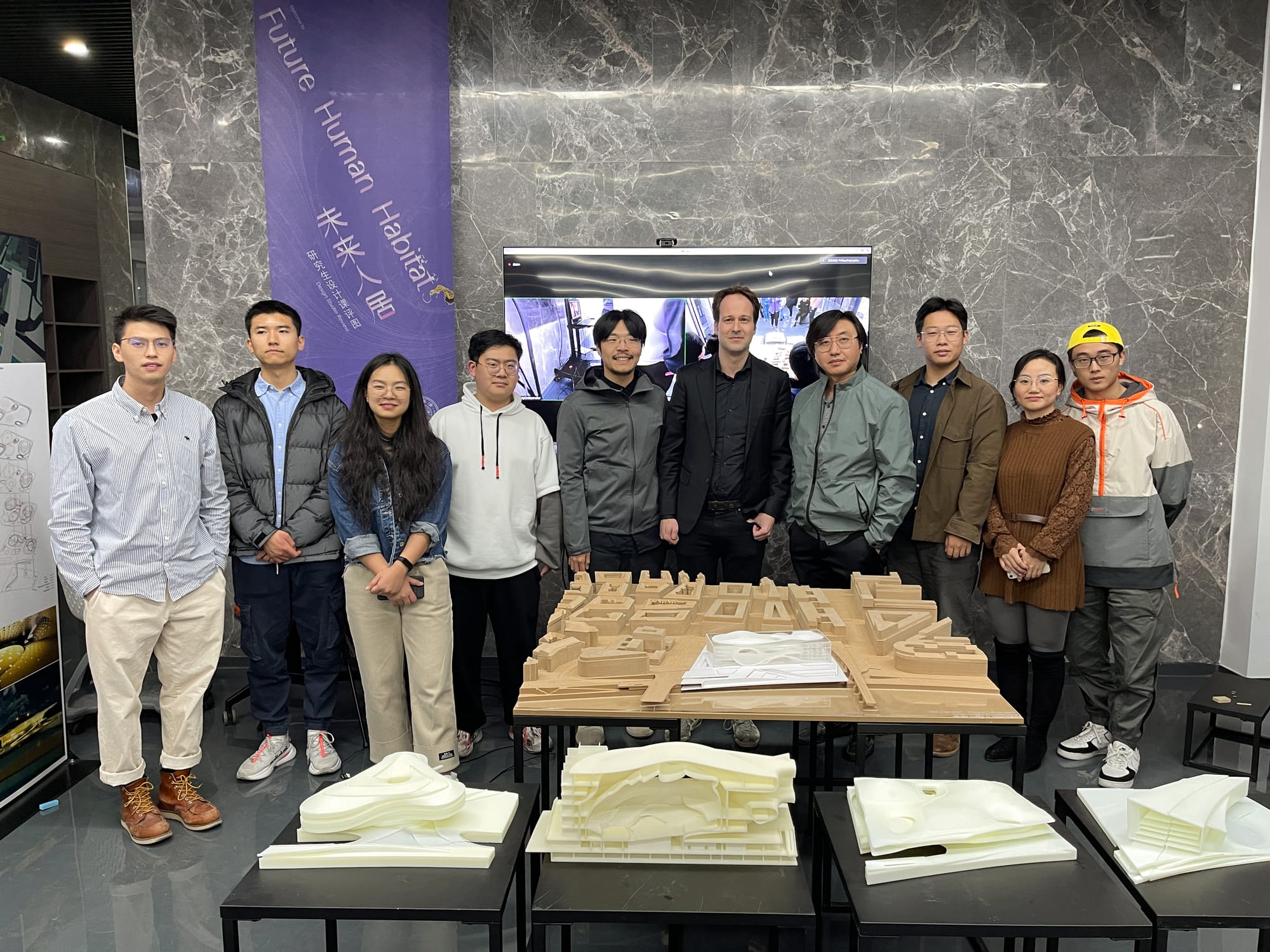
Seven graduate students, one competition brief, specialist input and a shared site model.
Brief
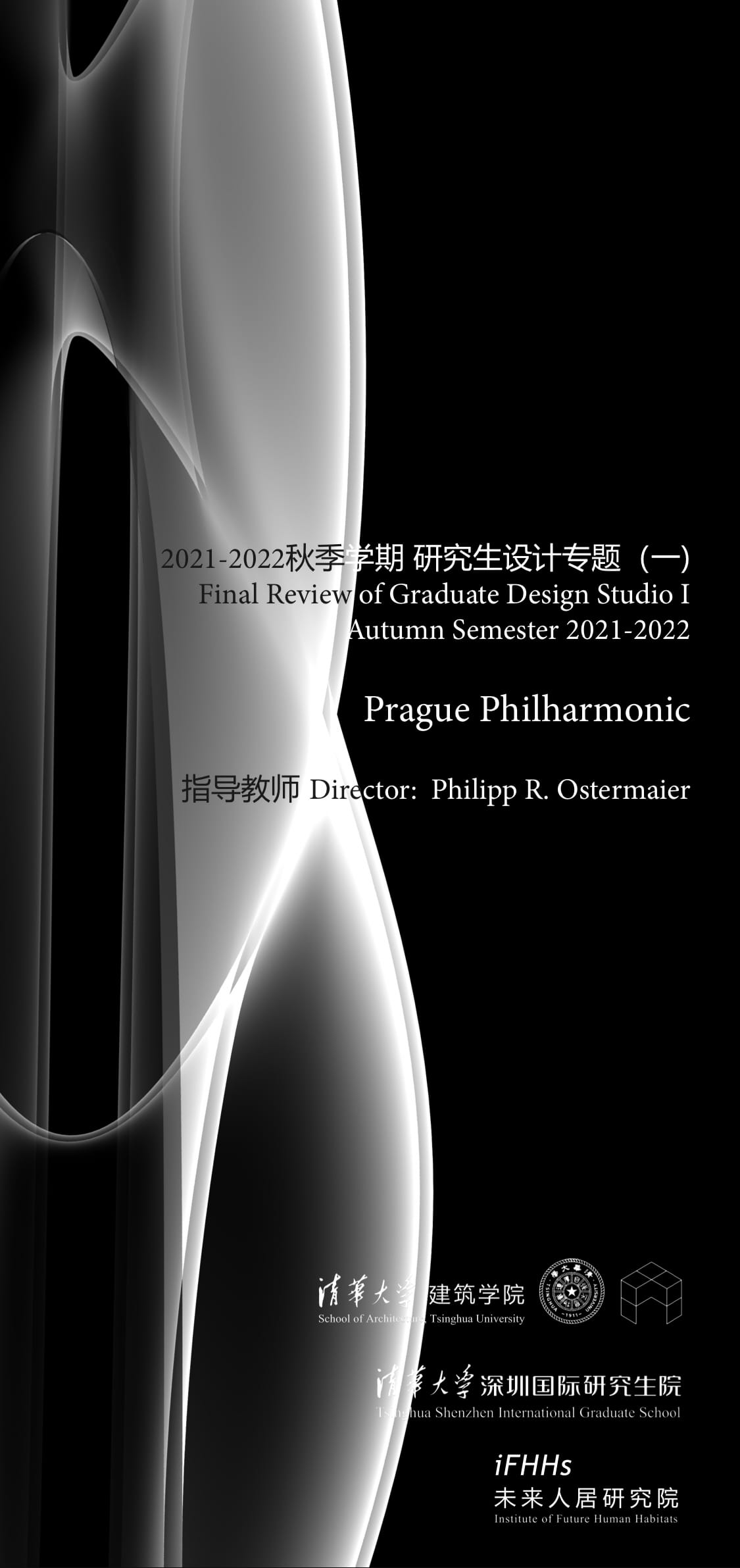
In 2021/22 I taught a graduate studio at Tsinghua Shenzhen’s Institute for Future Human Habitats (iFHHs) on the New Prague Philharmonic. Seven students; English, with Mandarin where it helped. The brief was the then-current international competition for the New Prague Philharmonic on the Holešovice / Bubny brownfield by the Vltava: a landmark hall inside a regeneration masterplan, with changing ground levels, existing fabric, major traffic arteries, rail and two bridges. Students had to recover riverside access, resolve a heavy performing-arts programme, and argue a public building under real urban pressure.
Students: Zemin Shao, Tingtao Yu, Kanghua Li, Llanhao Liao, Jingjie Shangguan, Honghui Li, Jiawei Xue.
Method as taught
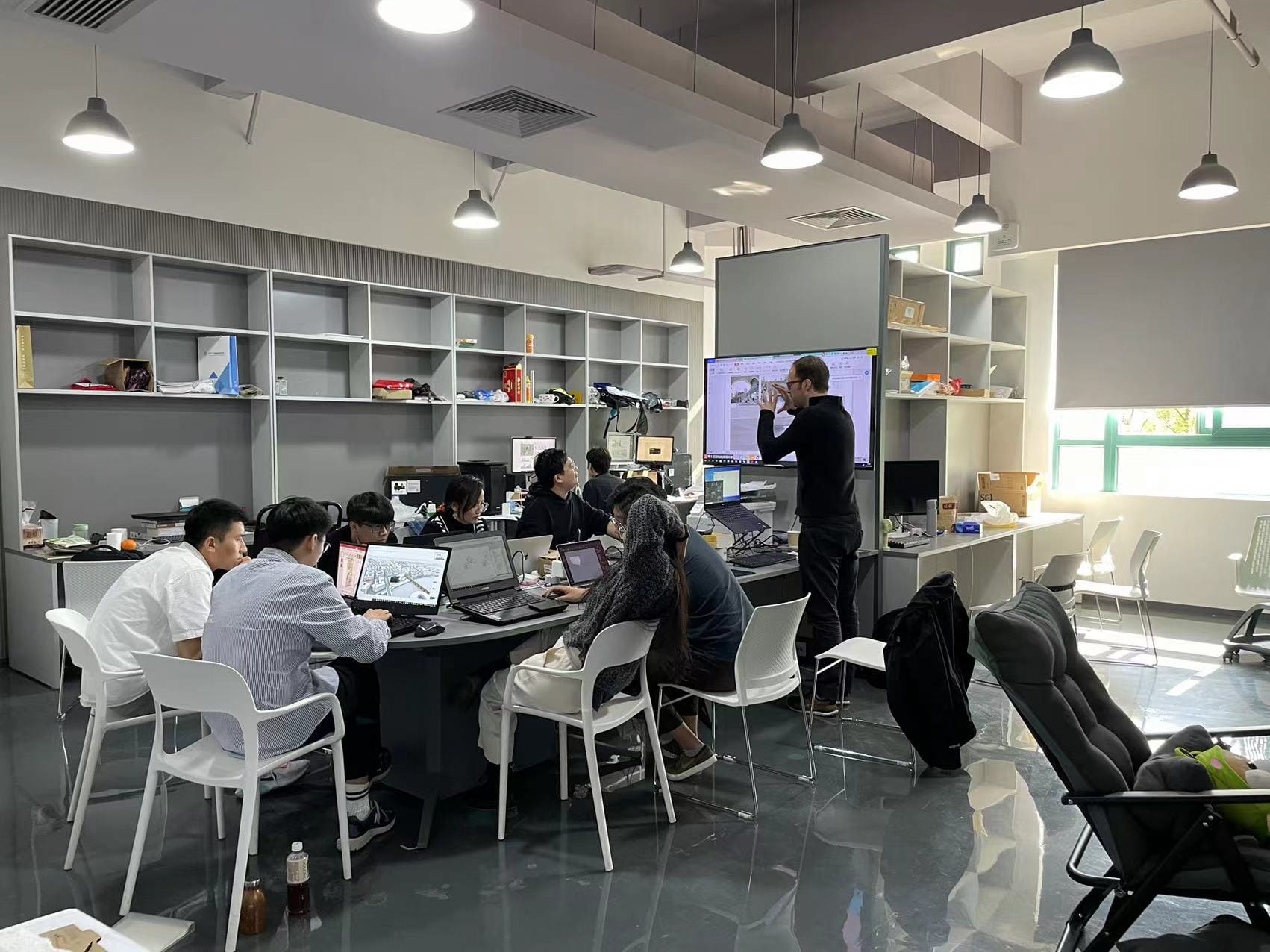
Weekly lectures, desk crits and technical support. Core tools: Rhino, Grasshopper and SketchUp; geometric acoustics with RWTH Aachen’s RAVEN; physical development through 3D printing, CAM and hand finishing. The semester moved from brief and site analysis to urban massing and programmatic layout, then into the main hall as the critical acoustic room of the project. Fundamentals of natural room acoustics and current auditorium design strategies were taught across the term, not as a late specialist add-on in theory — though in practice, as below, they often arrived late in the students’ own workflows.
Specialist lectures and reviews came from Peter Exton and Peter Fearnside (Marshall Day Acoustics), Dong Chen (Cundall), Martin Krcha (Zaha Hadid Architects), Benjamin Koren (OneToOne), and Lukas Aspöck (RWTH Aachen). The point was not to outsource design, but to put students under the multidisciplinary pressure through which a hall is actually argued.
What worked
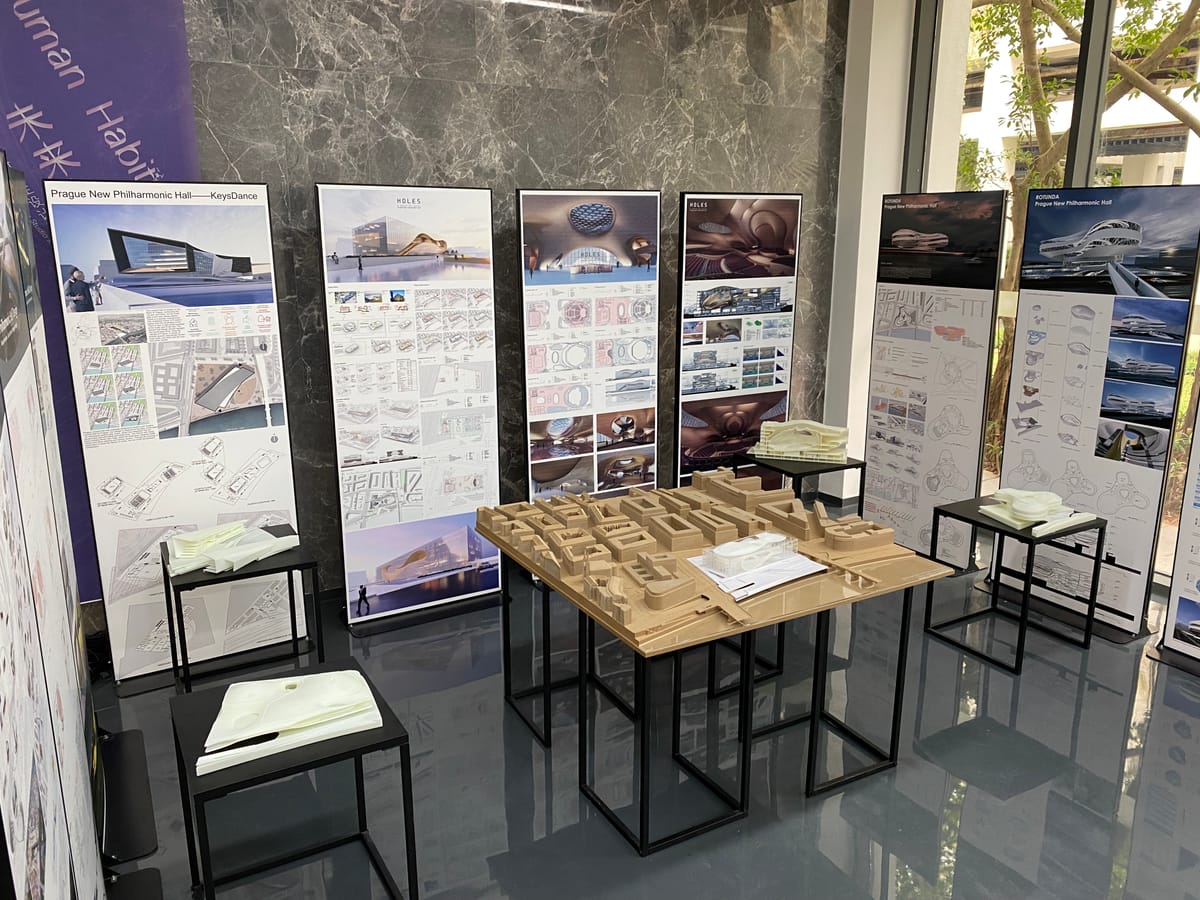
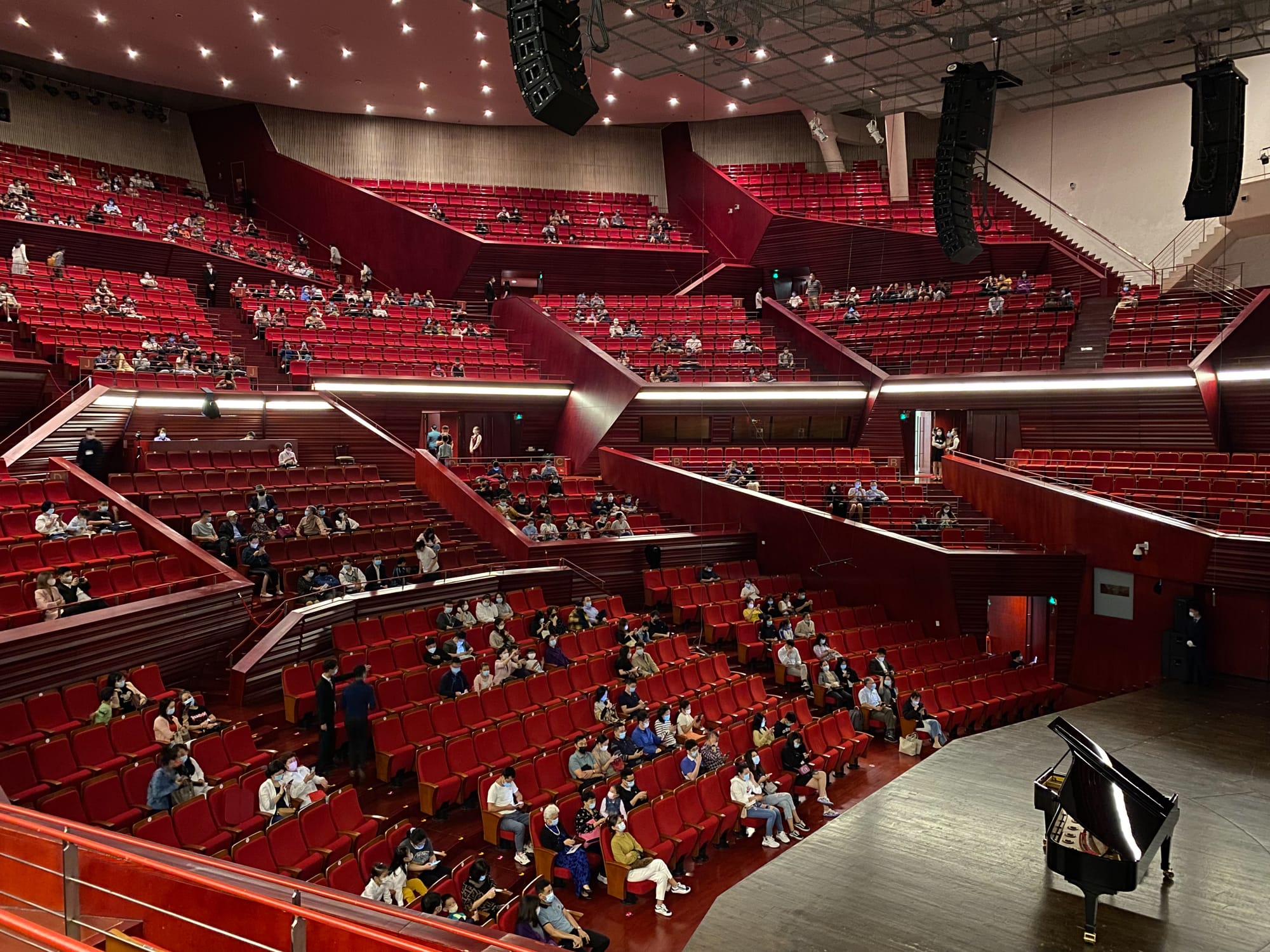
The studio produced complete architectural proposals: design reports, larger-scale models of the main halls, and insertion into a shared urban site model. Hall designs were compared with published reference rooms through geometric-acoustic testing. A visit to Shenzhen Philharmonic Hall gave students a live acoustic and musical reference before final review. The semester closed with an external jury including Likai Wei (SIGS), Shuai Lu (University of Sydney), Yehao Song (Tsinghua University Beijing), Andong Lu (Nanjing University), Martin Krcha and Dong Chen.
One practical decision mattered more than it sounds. The urban setting was too dense and multi-level for seven students to reconstruct individually, so I milled a shared 1:500 MDF surroundings model on the school CNC. Students could then place their halls into one common reference and spend their time on the architecture rather than rebuilding Prague. The model forced ordinary making questions — scale, abstraction, layer thickness as storey height — and kept the surroundings secondary to the project.
What failed / what changed
The limit was sequence. Urban form, programme and digital catch-up consumed the front of the term; acoustic work could then verify and refine a hall more often than it generated one. If I taught a related studio again, I would invert that order: establish acoustic-spatial questions early, with simple models and physical fragments, before reintroducing a full civic brief. SIGS remains the teaching precedent — including the limit that later work has to correct.
Making note
The shared site model was studio infrastructure, not a side project. 1:500; MDF laminated for ground plate and buildings; milled on a 3-axis CNC whose interface had to be run in Chinese; jigs devised so the plate could be cut to the edge without hitting the clamps. It was also the first full-table model attempted in a young workshop. Useful reminder: physical common references still do teaching work that a shared digital file does not.
Images
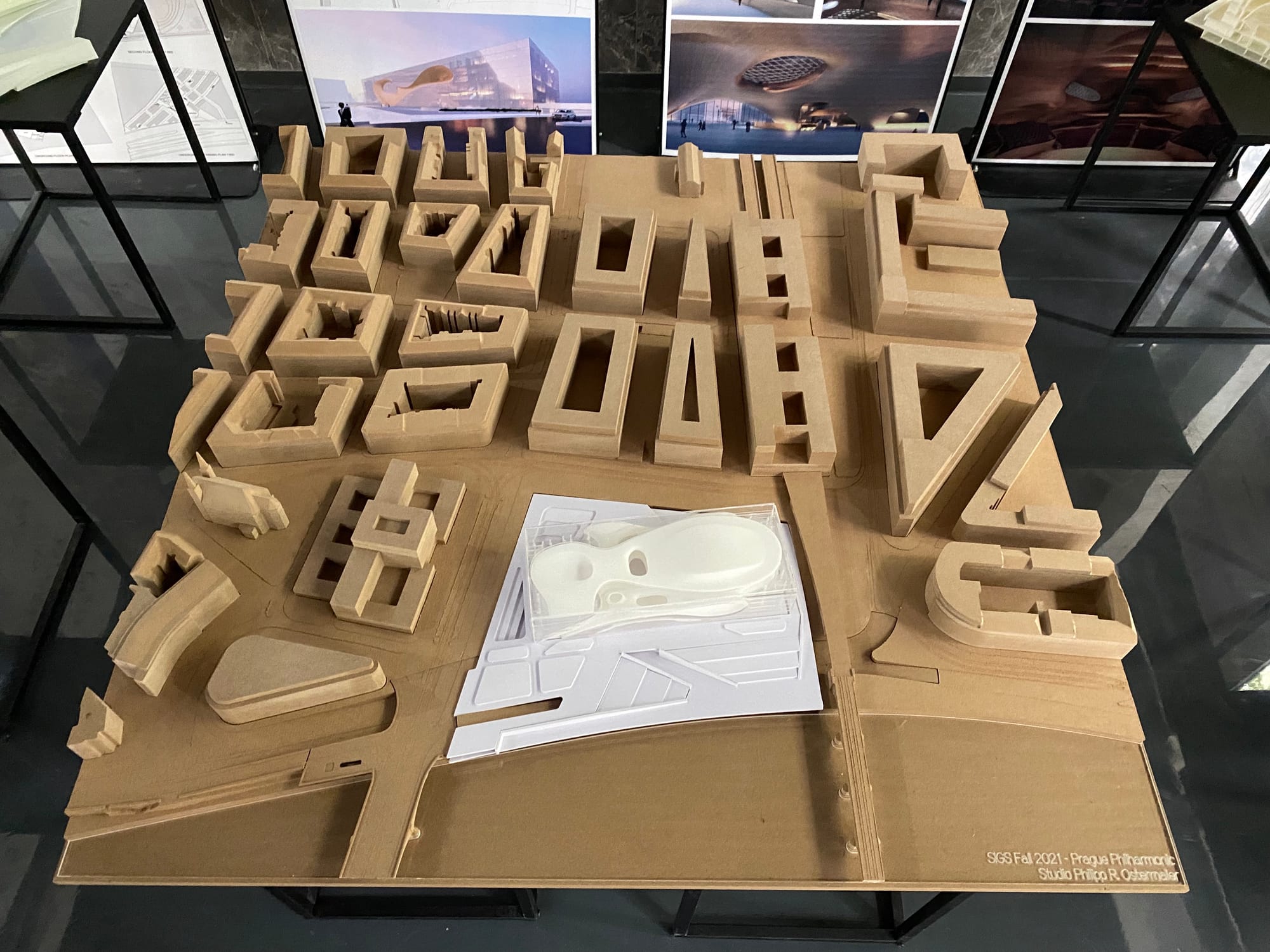
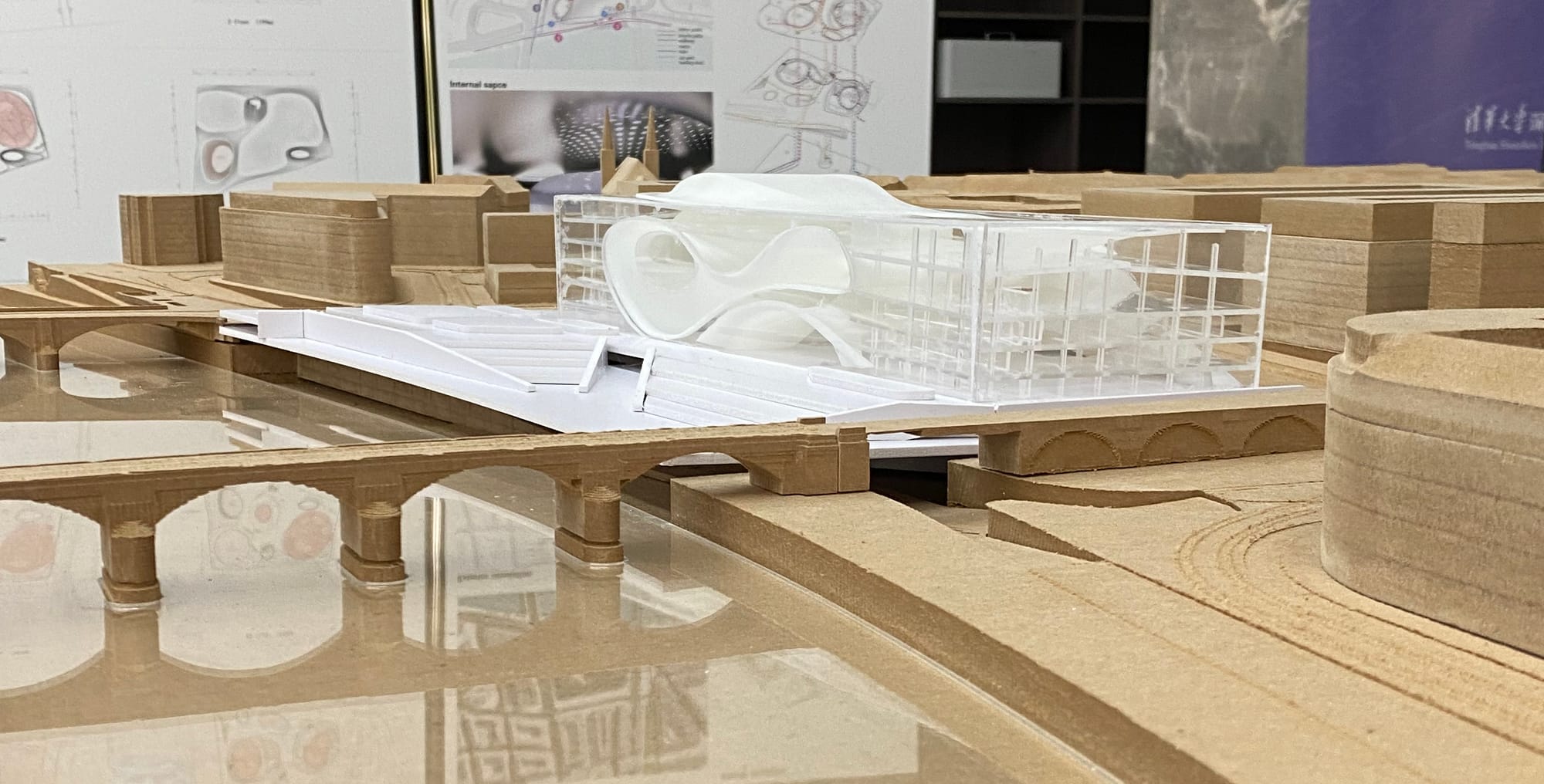
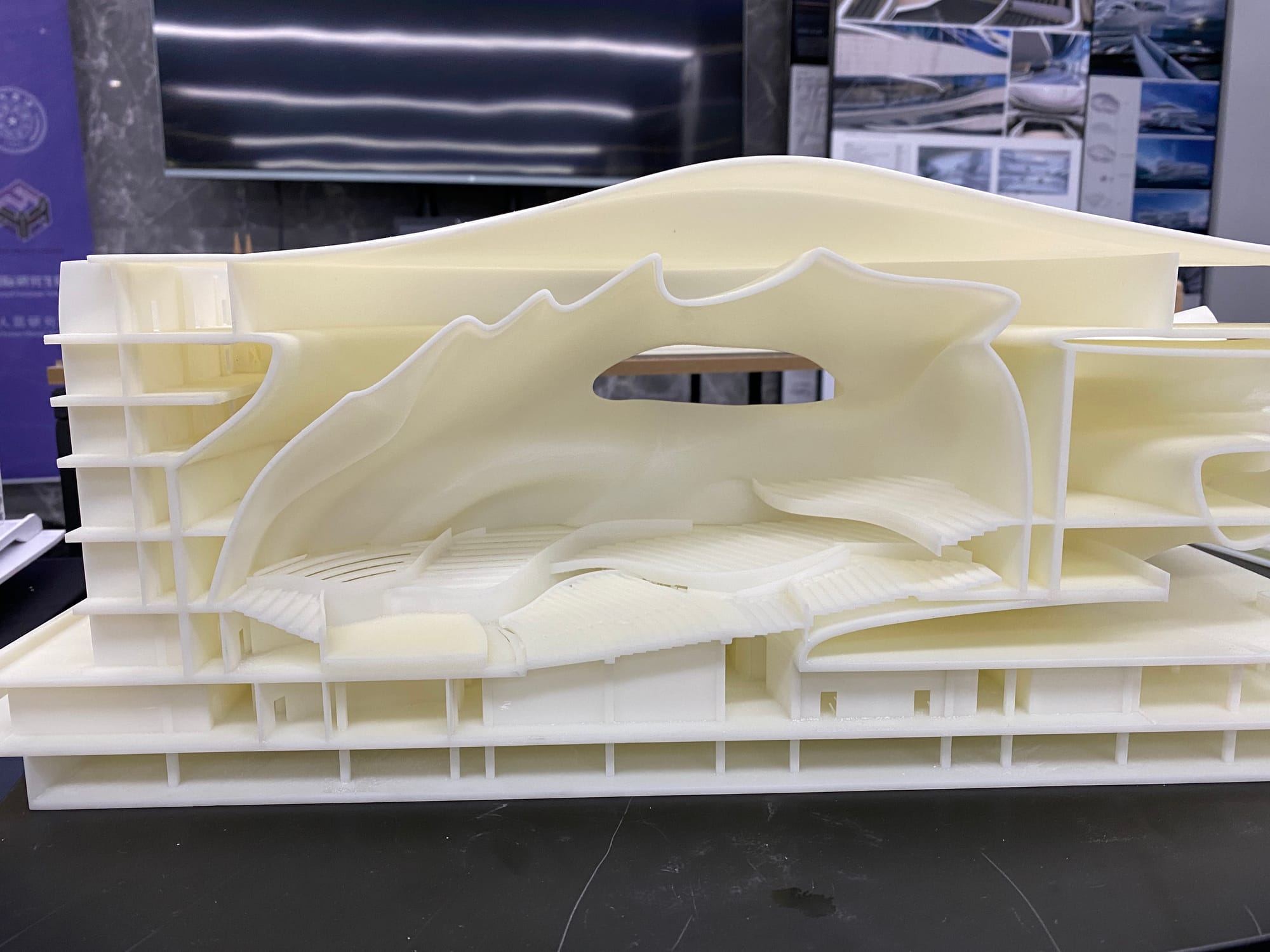
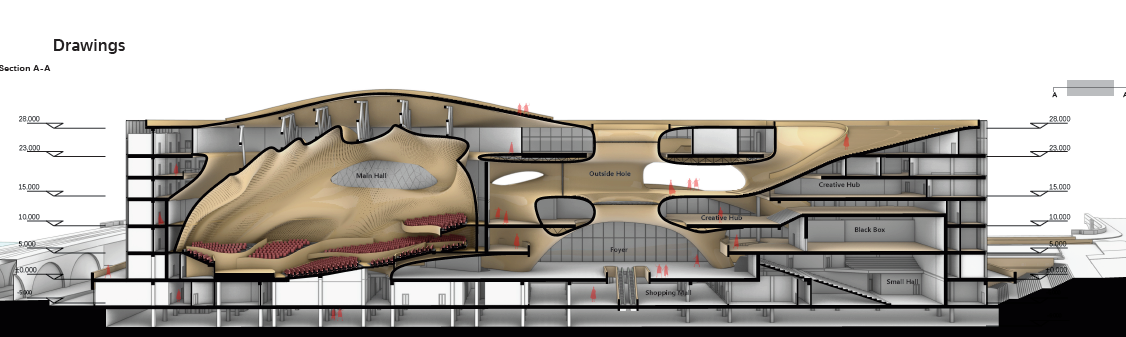
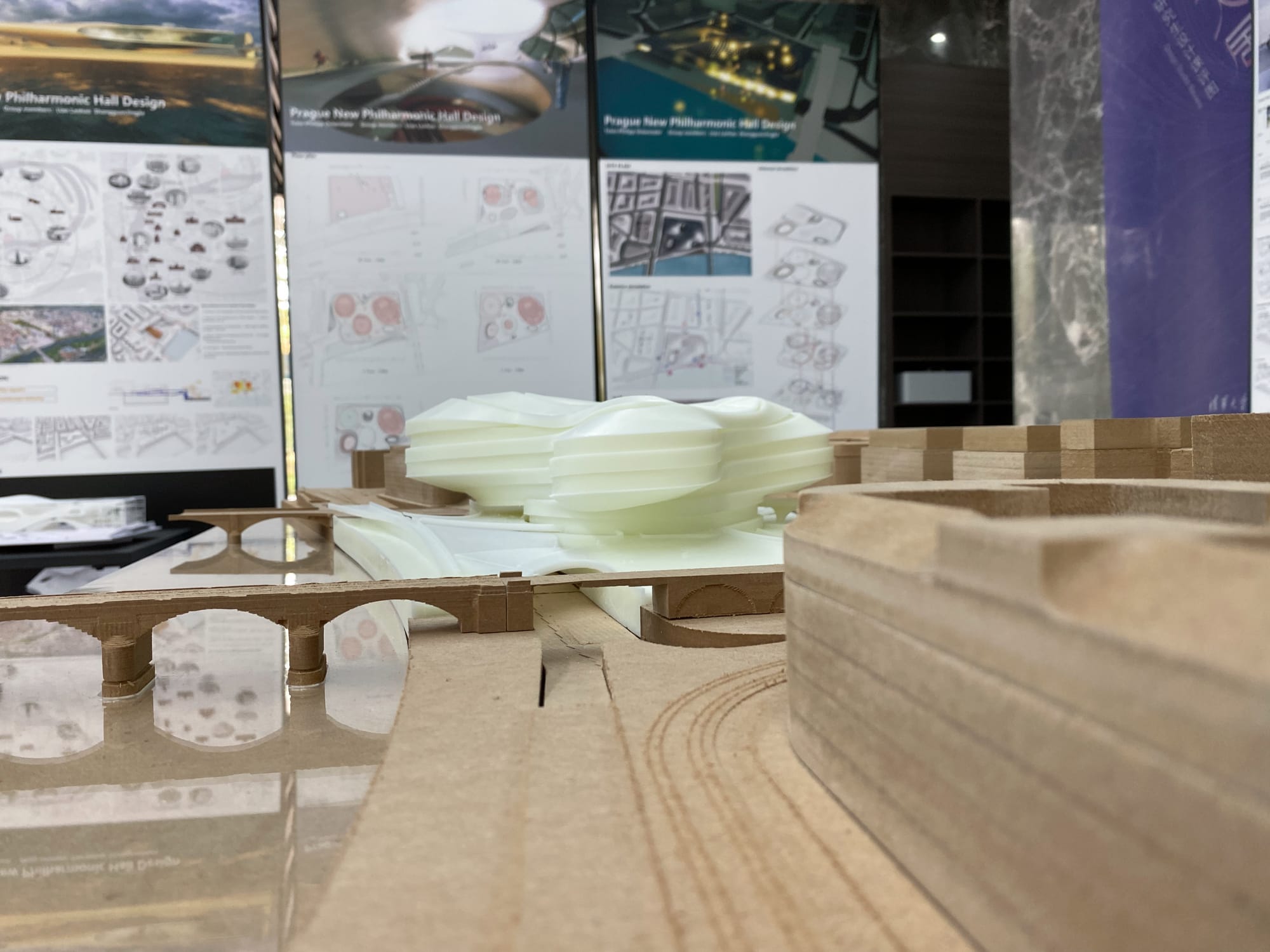
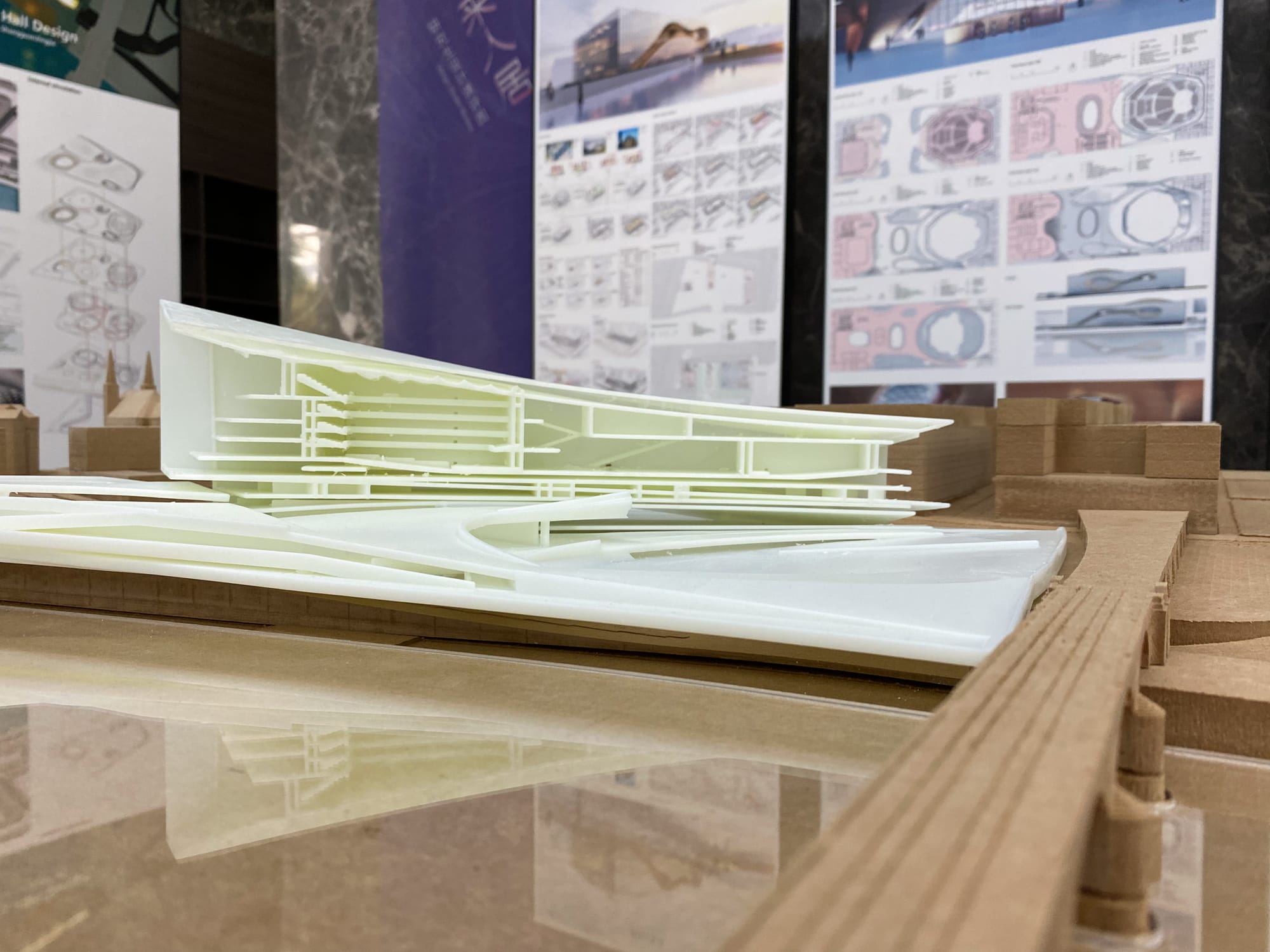
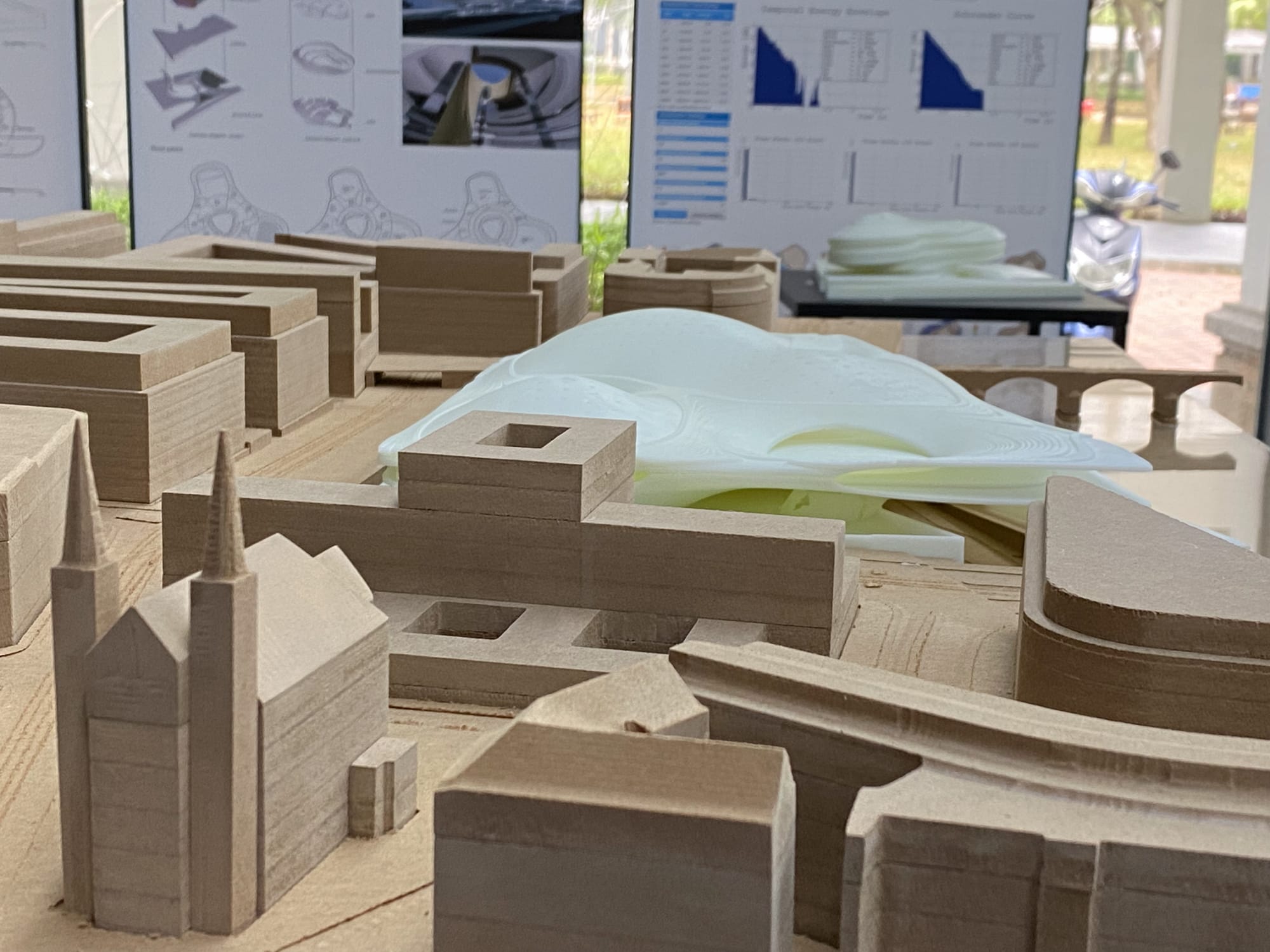
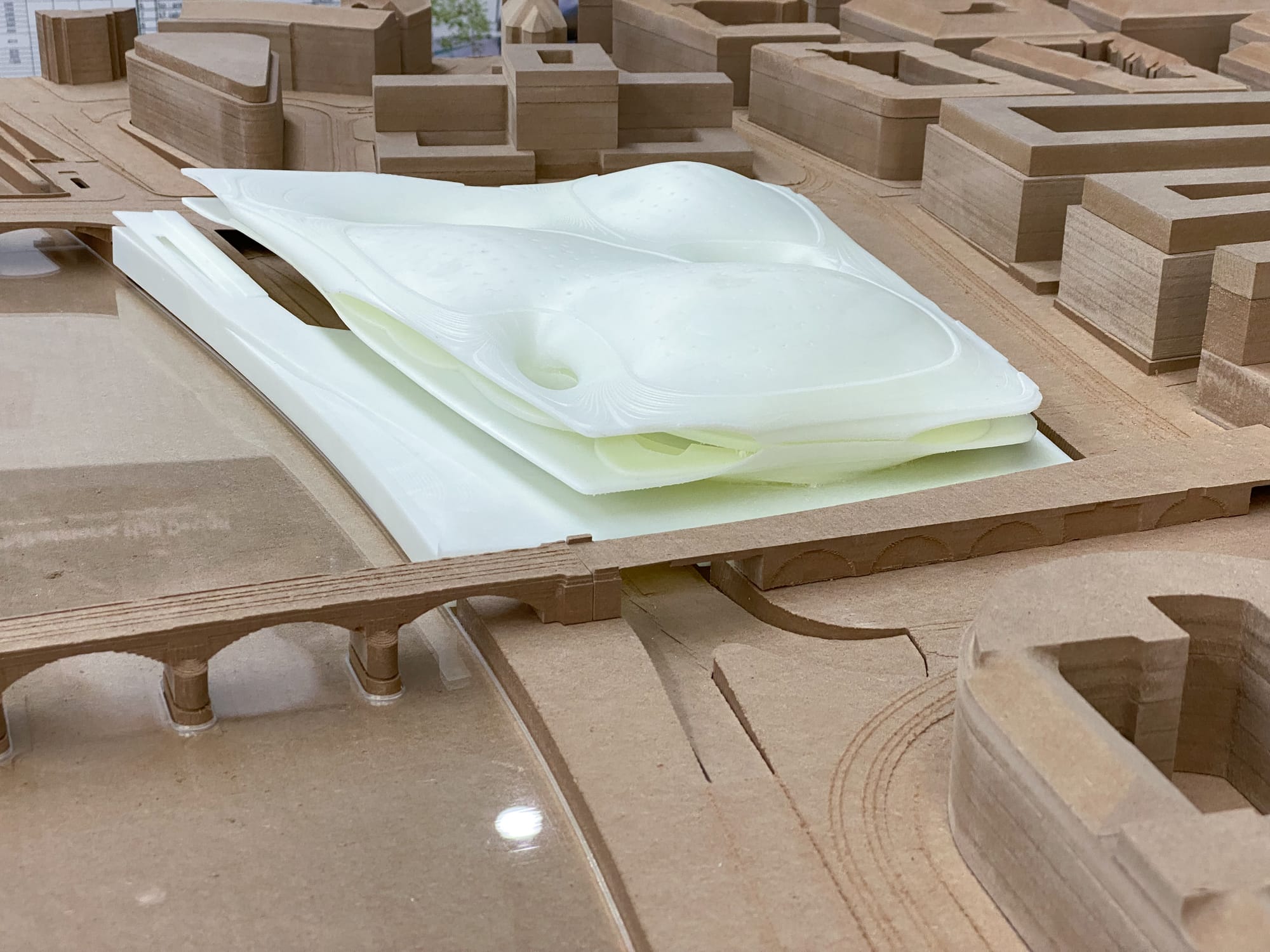
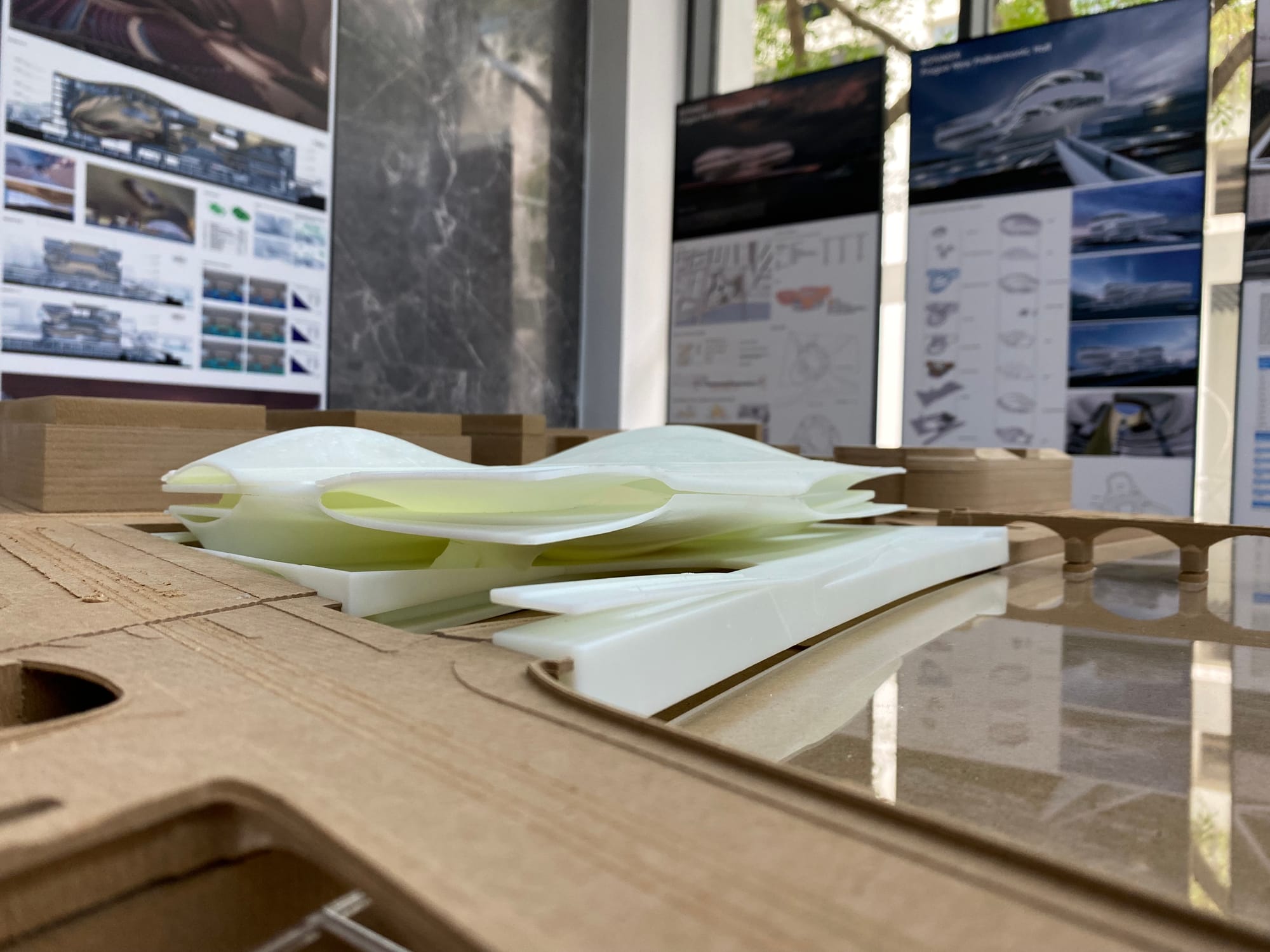
Students final models: From top: Zemin Shao, Tingtao Yu & Kanghua Li, Honghui Li & Jiawei Xue, Llanhao Liao & Jingjie Shangguan
Credits
Studio director: Philipp Ostermaier
With thanks to the consultants and reviewers named above, and to iFHHs at Tsinghua SIGS — Dean Peter Russell, Vice Dean Dr Weiguo Xu, Likai Wei, Cecilia Wen and Jill Zhao.